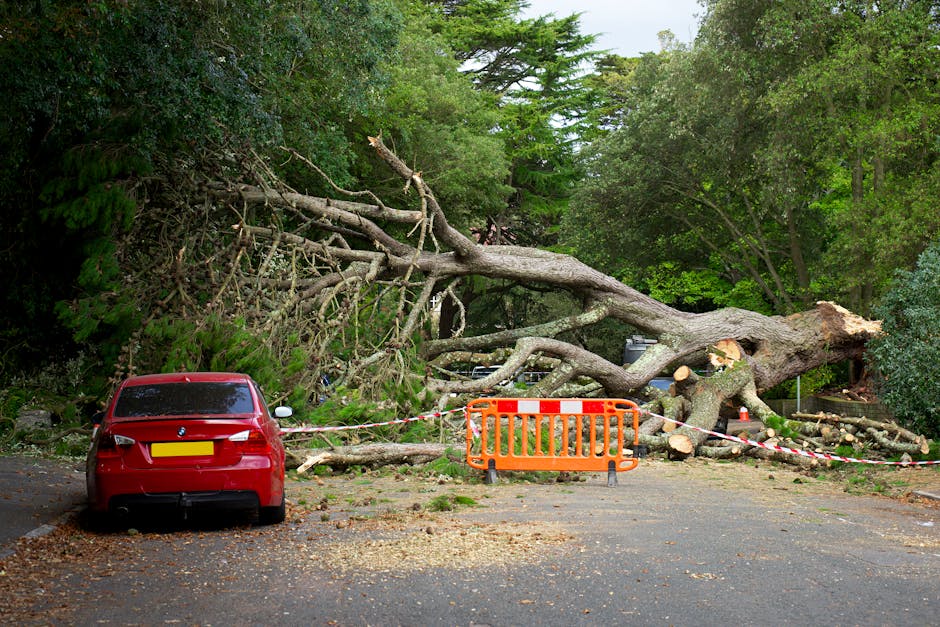
Same day emergency gardeners East Barnet tree and hedge removal
If a tree has come down across a path, a hedge has blown into a driveway, or a tangled boundary screen is suddenly unsafe, you do not want to wait around and hope it sorts itself out. Same day emergency gardeners East Barnet tree and hedge removal is about fast, calm, practical help when the garden has become a problem rather than a pleasure. In plain English: a team comes out quickly, assesses the risk, removes or makes safe what needs attention, and clears the mess before it causes more damage.
That might sound straightforward. In reality, urgent garden work often sits somewhere between gardening, site safety, and careful decision-making. One loose limb can block access, one overgrown hedge can hide a hazard, and one unstable tree can change the mood of a whole street, especially after a gusty East Barnet morning. This guide explains how the service works, what to expect, when it makes sense, and how to avoid common mistakes when time is tight.
Table of Contents
- Why Same day emergency gardeners East Barnet tree and hedge removal Matters
- How Same day emergency gardeners East Barnet tree and hedge removal Works
- Key Benefits and Practical Advantages
- Who This Is For and When It Makes Sense
- Step-by-Step Guidance
- Expert Tips for Better Results
- Common Mistakes to Avoid
- Tools, Resources and Recommendations
- Law, Compliance, Standards, or Best Practice
- Options, Methods, or Comparison Table
- Case Study or Real-World Example
- Practical Checklist
- Conclusion
- Frequently Asked Questions
Why Same day emergency gardeners East Barnet tree and hedge removal Matters
When a garden issue becomes urgent, the consequences are rarely just cosmetic. A fallen branch can block a side return. A hedge with brittle, storm-lashed growth can lean into a neighbour's fence. A tree with split limbs can create an obvious safety risk. And once access is restricted, everything else gets harder - deliveries, bins, school runs, parking, even a simple trip to the shed.
Emergency work matters because it reduces risk early. That is the real point. Not every job needs a full landscaping project or a long planning process. Sometimes the sensible move is a quick removal, a controlled cutback, or making an unsafe section stable enough until a more permanent solution can be arranged.
It also matters because urgent jobs are stressful. Let's face it, when your garden is littered with debris at 7:30 in the morning and the fence is half-hidden behind a hedge that has gone wild, you do not want a long back-and-forth. You want a proper answer, a fast arrival, and a team that knows how to work safely without turning a difficult day into a worse one.
For property owners in East Barnet, this often connects to practical everyday needs: keeping entrances clear, preventing further damage in windy weather, restoring privacy where a hedge has collapsed, or stopping a hazardous tree from becoming a bigger issue. If the garden also needs broader tidy-up work after the emergency is handled, a wider service such as garden clearance can help bring everything back under control.
How Same day emergency gardeners East Barnet tree and hedge removal Works
The process is usually faster and more focused than a standard garden booking. The goal is to get the immediate problem safe, removed, or contained. Depending on the situation, that may involve pruning, section-by-section dismantling, hedge reduction, branch removal, waste loading, and a clean sweep of the area so it is usable again.
In most cases, the sequence looks something like this:
- Initial contact and description of the issue. You explain what has happened, where the hazard is, and whether access is blocked or people are at risk.
- Rapid judgement of urgency. The job is assessed for safety, complexity, and whether it needs immediate attendance or a same-day visit.
- Arrival and on-site inspection. A careful look identifies the safest method of removal. This is especially important for trees close to buildings, sheds, fences, cables, or narrow paths.
- Containment or removal. The work may include taking down unstable sections first, reducing the weight of a hedge, removing broken material, or clearing fallen debris.
- Waste handling and tidy finish. Once the danger is dealt with, the material is cleared away and the site is left as neat as possible.
For tree-related emergencies, it is common to split the work into controlled stages rather than trying to remove everything at once. That is not hesitation. It is good practice. A split trunk or wind-damaged limb can behave unpredictably, so the safest approach is often the slowest-looking one. Ironically, that is what makes it quicker in the end.
For hedges, the response may be a hard reduction rather than full removal, especially if the hedge still has value as a boundary screen but has become unstable or unmanageable. If the hedge is part of a broader boundary issue, hedge trimming can be a useful follow-up once the urgent risk is dealt with.
Key Benefits and Practical Advantages
The most obvious benefit is speed. Same-day attendance can stop a small problem from becoming a costly one. But the advantages go beyond urgency.
- Reduced immediate risk: unstable branches, leaning stems, and obstructive hedges are dealt with before they cause injury or further damage.
- Restored access: paths, drives, gates, and side entrances can be reopened quickly.
- Less stress: a clear plan and quick action calm the situation down. That counts for a lot on a bad day.
- Protection for nearby structures: fences, walls, patios, and outdoor buildings are less likely to suffer secondary damage.
- Cleaner finish: emergency work often includes debris clearing, which helps the garden look and function normally again sooner.
- Better decision-making: a professional on site can help you decide whether the issue needs removal, reduction, or staged treatment.
There is also a practical financial side. If damage spreads because the issue is left unresolved, the eventual job may become larger and more disruptive. A prompt response can keep the work contained. Not always, of course, but often enough that it is worth taking seriously.
And if the emergency has left the rest of the garden in a rough state - broken foliage, scattered cuttings, mud, or trampled borders - it may be sensible to combine urgent tree and hedge work with broader garden maintenance to stop the space slipping back into disorder a week later.
Who This Is For and When It Makes Sense
This service is for people who need the problem handled quickly and safely, not eventually. Typical situations include storm damage, sudden branch failure, overgrown hedges causing access issues, and trees or hedges that have started to lean, split, or collapse.
You may need same-day help if:
- a tree or large limb has fallen across a path, drive, or boundary
- a hedge is blocking sightlines near a driveway or gate
- branches are scraping windows, roofs, or fences
- a hedge has been flattened by wind and is leaning dangerously
- you need to make a property safe before visitors, tenants, or tradespeople arrive
- you are dealing with a neighbour-facing boundary issue that cannot wait
It also makes sense for landlords and property managers. If a tenant reports a fallen branch, a blocked entrance, or a dangerous overhang, speed is often the difference between a manageable callout and a much bigger claim later. The same goes for homeowners preparing for a sale, an inspection, or simply trying to keep a front garden from looking abandoned after a rough spell of weather.
Truth be told, some people wait too long because they hope the hedge will "sort itself out" or the leaning tree will "hold on for a bit longer." Sometimes it does. Sometimes it absolutely does not. The line between tidy and risky can be very thin.
Step-by-Step Guidance
If you need urgent help, a clear process makes everything easier. Here is a sensible way to handle it.
- Check immediate safety. Keep children, pets, and anyone unnecessary away from the area. If branches are near power lines or there is visible structural damage, treat it as a priority safety issue.
- Take a quick look, but do not over-handle anything. Do not pull at unstable limbs or try to cut through stressed wood without the right equipment. It can shift suddenly.
- Record what you can. A few photos can help explain the situation quickly. No need for a photo shoot. Just enough to show the scale and access.
- Contact a local team that handles urgent garden work. Explain whether it is a tree problem, hedge collapse, or both, and say if the site is accessible today.
- Share practical details. Mention gates, parking, narrow access, conservatories, fencing, or anything delicate nearby.
- Agree what should happen first. In emergency work, priority is usually safety and access. Aesthetic tidying can come after the danger has gone.
- Confirm waste removal and finish. Ask whether debris will be taken away and whether the work includes a clean-up.
If the work needs a broader garden reset after the urgent bit is done, it can be helpful to look at related services such as general gardening services or tree lopping and removal for more structured follow-up work.
A quick note that people sometimes miss: access matters almost as much as the tree itself. If a team can get to the problem without dragging branches through the house, across a porcelain patio, or over a neighbour's wall, the whole job becomes cleaner and safer. Small detail. Big difference.
Expert Tips for Better Results
In our experience, the best emergency jobs are the ones where the customer gives clear, calm information at the start. You do not need to know technical tree terms. You just need to say what is happening and what is in the way.
- Describe the movement, not just the appearance. Is the tree static, or is it shifting in the wind? Is the hedge just messy, or has it collapsed?
- Tell the team what is nearby. Fences, sheds, glass, vehicles, and paving all change the approach.
- Ask what will be removed and what will remain. Sometimes a partial reduction is safer than a full take-down on the day.
- Keep the route clear. Moving wheelie bins, bikes, and planters out of the way can save time and avoid damage.
- Expect practical, not polished. Emergency work is about resolving risk first. If the garden looks a little raw afterwards, that can be normal. It can be improved later.
One more thing: if the issue started after a storm, avoid assuming every branch is equally unsafe. Some parts may be under tension, others may be loose, and some may be perfectly stable. The trick is reading the load correctly. That is where experience matters more than enthusiasm. Enthusiasm, frankly, can be overrated with chainsaws nearby.
Where boundary privacy is the wider concern, a professional may suggest a trimmed-down hedge approach first and a more permanent border solution later, perhaps alongside fencing or other garden improvements.
Common Mistakes to Avoid
Urgent jobs encourage rushed decisions, and rushed decisions are how small problems become awkward ones. A few common mistakes show up again and again.
- Trying to cut unstable wood yourself. Even a modest branch can move unexpectedly when it is under stress.
- Ignoring nearby hazards. A hedge may be the visible problem, but the real issue could be a hidden fence panel, a damaged gate, or a cracked stem behind it.
- Choosing only on speed and not on method. Same-day response is great, but the work still needs to be done properly.
- Forgetting waste volume. A large hedge or tree can produce far more debris than people expect.
- Leaving the site half-managed. If the danger is removed but the area is left blocked, slippery, or unstable, the job is not really finished.
Another frequent one: customers sometimes ask for the biggest cut possible because they want the issue "gone." That can be sensible, but not always. Heavy reduction can affect regrowth, balance, and privacy. Sometimes a staged approach is the better call. Slightly less dramatic, yes. Usually smarter too.
Tools, Resources and Recommendations
Emergency garden work depends on the right equipment, but the useful bit is understanding what those tools are for. You do not need to buy them. You just need to know why the team may take one approach rather than another.
| Tool or resource | What it helps with | Why it matters in an emergency |
|---|---|---|
| Hand saws and pruning tools | Smaller branches, precise cuts | Useful where control matters more than speed |
| Chainsaws | Thicker timber and major removals | Efficient, but must be used carefully and by trained operators |
| Secateurs and loppers | Hedge clean-up and lighter growth | Helps tidy damaged sections without overcutting |
| Ropes and lowering gear | Controlled dismantling | Important near fences, sheds, and tight access points |
| Protective equipment | Safety for the crew | Non-negotiable where sharp tools, falling material, or awkward conditions are involved |
From the customer side, the best "resource" is actually preparation. Have your address ready, describe the issue clearly, and check whether there is parking or rear access. If the garden is especially cluttered, a separate garden clearance visit may be worth arranging after the emergency removal so the site is truly reset.
If you are comparing providers, ask practical questions rather than vague ones. For example: Will the team remove waste? Do they handle unstable trees near buildings? Is the work insured? Can they explain the safest method before starting? That sort of conversation tells you much more than a glossy promise ever will.
Law, Compliance, Standards, or Best Practice
Urgent tree and hedge work is not just about appearance. It also touches on safety, property responsibility, and sensible care around neighbouring land. While the exact legal position depends on the site, a few best-practice principles are worth keeping in mind.
First, tree work should be assessed carefully if there is any sign of structural weakness, decay, or unstable movement. Not every leaning tree is an immediate emergency, but if there is obvious risk to people, buildings, or access, it should be treated seriously and inspected promptly.
Second, hedge removal or heavy reduction can affect privacy, boundaries, and neighbour relations. If the hedge sits on or close to a boundary, it is wise to be clear about ownership and what outcome you actually want. Removing the wrong section in haste can create a headache that outlives the original problem. Nobody needs that on a Tuesday afternoon.
Third, responsible garden work should be carried out with proper attention to health and safety, insurance, and waste handling. Reputable providers should be able to explain their approach in plain language. If you want a sense of the standards a local team works to, it is worth reading their health and safety policy and insurance and safety information before booking.
Best practice also includes careful disposal and a tidy finish. If the cuttings are being removed, they should be handled in a way that keeps the site safe and manageable. Some customers also like to think ahead about sustainability and ask how waste is dealt with. That is sensible. A small job can still be done responsibly.
Options, Methods, or Comparison Table
Not every urgent garden issue needs the same approach. The right method depends on the type of plant, the level of risk, and the available access. Here is a simple comparison to help with decision-making.
| Method | Best for | Pros | Watch-outs |
|---|---|---|---|
| Selective pruning | Small damage, isolated branches | Preserves more of the plant | May not be enough for major instability |
| Height or width reduction | Overgrown or wind-hit hedges | Restores access and shape quickly | Can look severe at first |
| Sectional tree removal | Unstable or awkward trees near structures | Safer in tight spaces | Takes more time and planning |
| Full removal | Dead, dangerous, or irreparably damaged trees | Removes the risk completely | Leaves a gap that may need replanting or design work |
If the emergency has exposed another issue, such as damaged panels or an opening in a boundary line, it may be useful to follow up with fencing or even longer-term landscaping once the immediate risk is gone. The point is not just to cut something down. The point is to leave the property functioning properly again.
Case Study or Real-World Example
Picture a typical winter evening in East Barnet. The wind has picked up, rain is coming sideways for an hour or two, and a dense hedge at the side of a driveway has bowed outward after a heavy gust. By morning, the lower branches are pressed against the car space and a split limb from a nearby tree is hanging awkwardly over the path. Nothing cinematic. Just one of those annoying, messy situations that makes the whole front of the house feel unsettled.
The homeowner calls for same-day help. The first priority is not to make the hedge "look nice." It is to make the access safe. The team checks the tree limb, confirms it needs controlled removal, and clears the hedge section enough to reopen the side return. The debris is loaded and removed, the path is left safe to walk on, and the homeowner can get on with the day.
A few days later, the same property benefits from a follow-up visit focused on shape and tidiness rather than emergency response. That second visit may include broader garden maintenance or a more considered hedge finish. The first visit solved the danger. The second visit restored the garden's dignity. Both mattered, just at different moments.
This is a good example of why emergency work and planned garden work should not be confused. They overlap, but they are not identical. One is about immediate control. The other is about longer-term presentation and upkeep.
Practical Checklist
Use this quick checklist if you are arranging urgent tree or hedge removal today:
- Keep people and pets away from the unsafe area.
- Check whether the issue is blocking access or creating a clear hazard.
- Take a few straightforward photos if it helps explain the situation.
- Note whether the tree or hedge is touching buildings, fences, or vehicles.
- Share any access limits, gates, or parking constraints.
- Ask what will be removed, reduced, or left in place.
- Confirm whether debris will be taken away the same day.
- Ask about insurance, safety practice, and method before work starts.
- Plan any follow-up tidy-up or maintenance for after the emergency is resolved.
- Keep the site clear until the team arrives.
Expert summary: the best same-day emergency response is calm, specific, and safety-led. If the work is described well, accessed well, and handled with the right method, the whole process becomes much smoother. Not glamorous, maybe, but very effective.
Conclusion
Same day emergency gardeners East Barnet tree and hedge removal is about more than simply cutting back overgrowth. It is a fast, practical response to urgent garden problems that affect safety, access, and peace of mind. Whether the issue is storm damage, a fallen branch, a collapsed hedge, or a tree that suddenly looks far less trustworthy than it did yesterday, the right response is to act early and deal with it properly.
The key is balance: move quickly, but do not rush blindly; focus on safety, but do not forget the finish; solve today's problem, but keep the longer-term garden picture in mind. That is where good local work really shows. A calm hand on a chaotic day. Simple as that.
Get a free quote today and see how much you can save.
If you are unsure whether the job needs immediate attention, trust your instincts and ask for advice. It is usually better to get a prompt assessment than to spend the afternoon hoping a leaning branch stays put. Gardens have a way of reminding us who is in charge. Sometimes gently, sometimes not.
Frequently Asked Questions
What counts as a gardening emergency?
Anything that creates an immediate safety issue, blocks access, risks damage, or cannot reasonably wait for a normal appointment can count as an emergency. Fallen branches, collapsed hedges, and unstable trees are common examples.
Can a same day team remove both trees and hedges?
Yes, if the work is within the team's capability and the site conditions are suitable. Often the job involves a mix of reduction, removal, and clearing rather than just one task.
Is emergency tree removal always a full removal?
Not necessarily. Sometimes the safest choice is sectional dismantling or partial reduction. Full removal is used when the tree is dead, unstable, or causing a serious hazard.
What should I do before the gardeners arrive?
Keep the area clear, move people and pets away, and gather a few details about access and nearby obstacles. A couple of photos can help, but do not try to fix the problem yourself.
How fast can same day emergency garden work happen?
That depends on workload, location, access, and the nature of the issue. The key point is that urgent jobs are prioritised differently from routine bookings.
Will the team take away all the waste?
Usually the aim is to remove the debris created by the urgent job, but it is sensible to confirm this in advance. Large tree or hedge work can produce more waste than expected.
What if the tree is close to a fence or shed?
That affects the method and may require more controlled cutting. The team should assess the surroundings first so the removal does not cause avoidable damage.
Do I need permission for hedge or tree removal?
It depends on ownership, location, and any protections that may apply. If you are unsure, ask for advice before the work starts rather than after.
What if the hedge is on a boundary with a neighbour?
Be clear about which side is affected and what you want done. Boundary work can be simple, but only if the ownership and access assumptions are correct.
How do I choose a reliable emergency gardener?
Look for clear communication, sensible safety practice, appropriate insurance, and a method that sounds controlled rather than rushed. A good provider should explain what they will do and why.
Can urgent work be followed by regular maintenance?
Absolutely. In fact, that is often the smartest approach. Emergency removal solves the immediate issue, and follow-up care helps prevent the same mess from building up again.
What if I am still not sure whether the problem is urgent?
If there is visible instability, blocked access, or any risk to people or property, treat it as urgent and ask for a prompt assessment. When in doubt, err on the side of caution. It saves a lot of grief later.